
Law Of Continuity - Gestalt Laws of Perceptual Organization
The law of continuity is a Gestalt principle that can help you create better websites. Find out how it works and how to apply it .
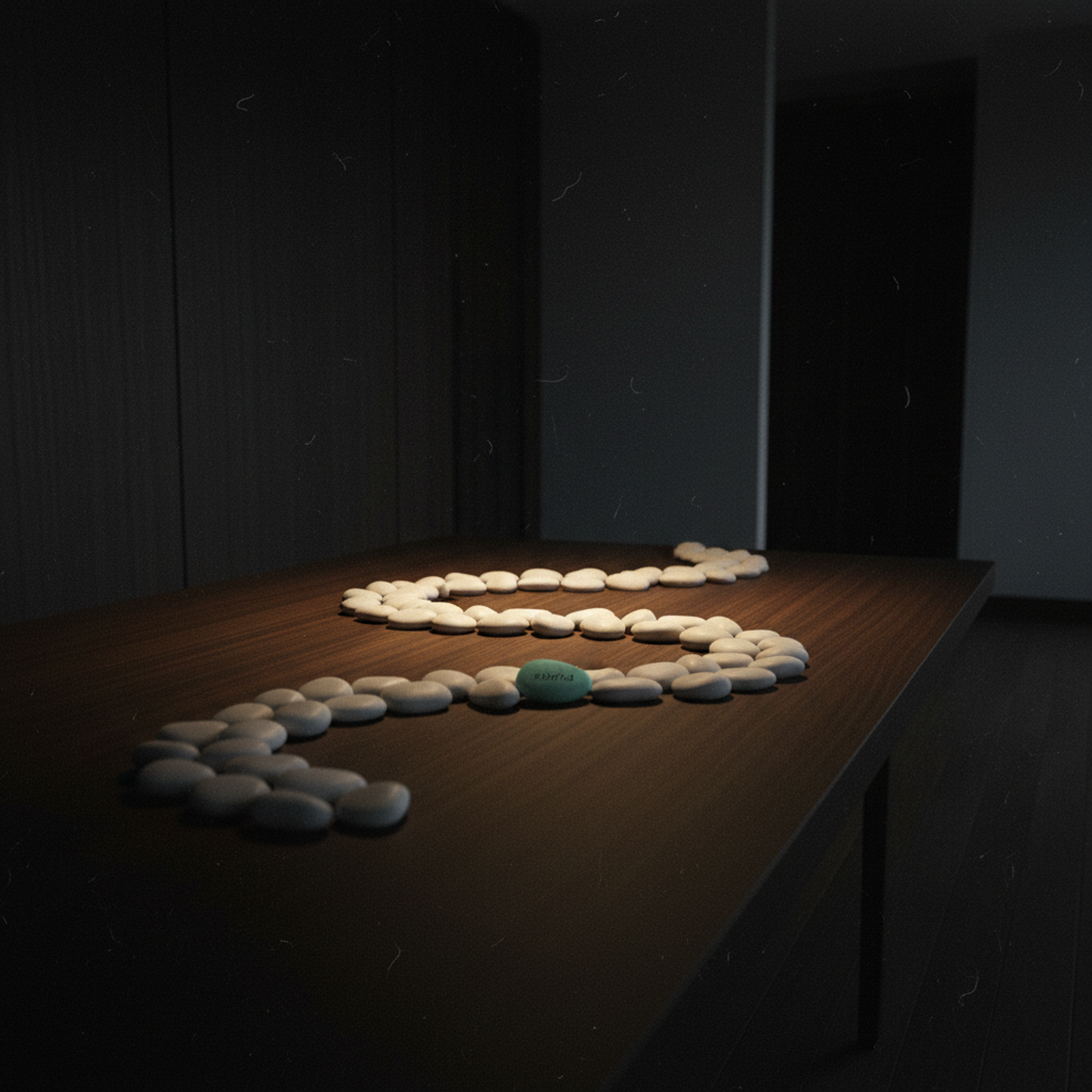
The law of continuity is one of the Gestalt principles that describe how humans perceive and organize visual information. According to this principle, we tend to see elements that are aligned or connected as part of a continuous line or curve, rather than as separate or disjointed parts. This helps us make sense of complex or ambiguous stimuli and create a coherent whole.

The law of continuity has important implications for web design, web development, UX, and UI. By applying this principle, designers and developers can create websites that are more intuitive, user-friendly, and aesthetically pleasing.
What is the law of continuity?
The law of continuity was first proposed by Max Wertheimer, one of the founders of Gestalt psychology, in 1923. He observed that when we see a series of dots or lines that form a smooth curve or a straight line, we perceive them as a single entity, rather than as individual elements. He also noticed that when two lines intersect, we tend to see them as continuing in their original direction.
The law of continuity is based on the idea that our visual system prefers simplicity and order over complexity and chaos. We tend to follow the path of least resistance and avoid abrupt changes or interruptions in our perception.
How to apply the law of continuity in UX design?
- Create a clear and consistent visual hierarchy that guides users through the product or service.
- Group related elements together and separate unrelated elements apart to help users find what they need.
- Use smooth transitions and animations to create a seamless user experience.
- Avoid unnecessary breaks or interruptions that might confuse or frustrate users.
How to apply the law of continuity in UI design?
- Create a smooth and harmonious visual flow that connects different elements and pages.
- Use contrast and alignment to create focal points and emphasize important information.
- Use curves and lines to create movement and dynamism in the interface.
- Use whitespace and negative space to create balance and clarity in the interface.
Real examples that use the law of continuity
- Spotify: uses cards and tiles to display different categories and playlists, aligned horizontally and vertically, with smooth transitions and animations.
- Airbnb: uses breadcrumbs to show users where they are, and cards and tiles grouped together by proximity and similarity.
- Netflix: uses sliders and carousels to show multiple genres and titles, with curves and lines to create movement and direction.
Conclusions
The law of continuity is one of the Gestalt principles that can help designers and developers create better web design, web development, UX, and UI. By applying this principle, they can create websites that are more intuitive, user-friendly, and aesthetically pleasing for users.
Other Gestalt Laws
Check out the other five Gestalt laws in our following articles:
Bibliography
[1] M. Wertheimer, “Laws of organization in perceptual forms,” in A source book of Gestalt psychology, W.D. Ellis (Ed.), London: Routledge & Kegan Paul Ltd., 1938, pp. 71-88.


