
User Experience: 7 Key Factors
7 key factors that influence UX: useful, usable, findable, credible, desirable, accessible, valuable.

This article, a summary of the Chapter 3 of the document "The Basics of User Experience Design" by Interaction Design Foundation, emphasizes the significance of User Experience (UX) in product success.
User Experience (UX) is crucial for the success of a product in the market. People often confuse UX with usability, which focuses on how easy a product is to use. While usability is a part of UX, it has evolved to include other aspects as well. To deliver successful products that users love, we must consider all aspects of UX.
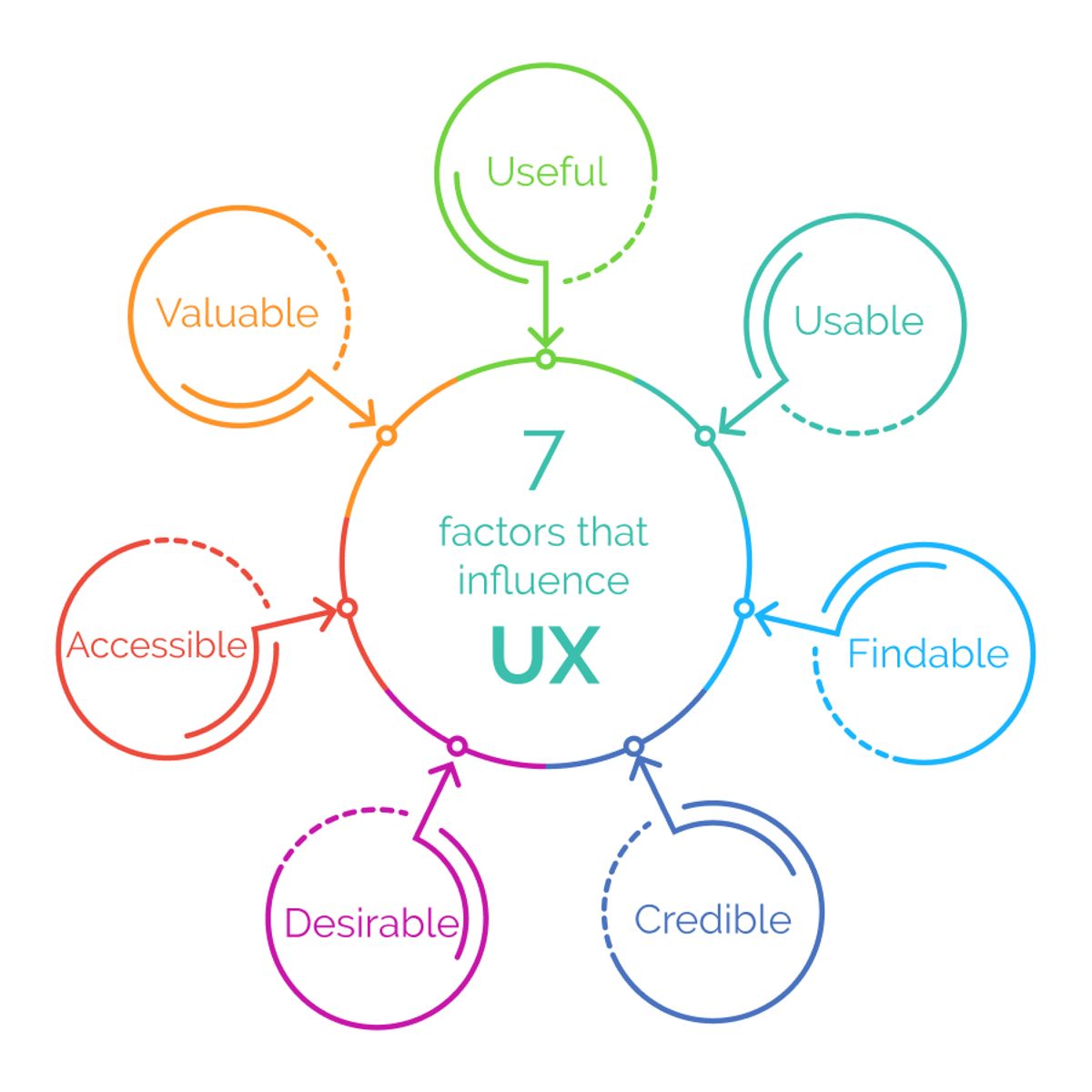
7 factors that influence UX [1]
1. Useful
If a product isn't helpful to the people it's meant for, why bring it to the market? Without a clear purpose or value, it becomes difficult to compete with other products that meet specific needs. It's important to remember that "useful" is subjective and can go beyond practical benefits. For example, something can be considered useful if it brings enjoyment or looks nice.
2. Usable
Usability focuses on making it easy and efficient for users to achieve their goals with a digital product. The 5 characteristics of usable products are: Effectiveness, Efficiency, Engagement, Error Tolerance, and Ease of Learning.
3. Findable
Findable refers to the concept of making a product easy to locate, including the content within digital or information-based products. If you can't find what you're looking for in a website, you're likely to give up and leave. By implementing effective organization, labeling, and search capabilities; digital products can ensure that users can easily locate the information or items they need.
4. Credible
Credibility is all about building trust with the users. It goes beyond simply delivering a product that performs its intended function. It also involves assuring users that the product will endure for a reasonable amount of time and that the information provided is accurate and suitable for their needs. Some ways to establish credibility: clear and accurate information, testimonials and reviews, trust seals and certifications, contact information and support, and a clear privacy policy and data protection.
5. Desirable
Desirability in design is conveyed through factors such as branding, image, identity, aesthetics, and emotional design. The more desirable a product is, the more likely users who possess it will boast about it and create a sense of desire in others.
6. Accessible
Accessibility means making sure that all users, including those with disabilities or impairments in hearing, vision, motion, or learning, can easily access and use the product or service. According to census data, at least 19% of the population had a disability in 2010. It's important to remember that designing for accessibility often leads to products that are easier for everyone to use, not just individuals with disabilities. Some good practices: provide alternative text for images, use proper heading structure, ensure keyboard accessibility, provide clear and concise link text, use sufficient color contrast, provide closed captions and transcripts for multimedia, implement proper form validation, and ensure responsive design.
7. Valuable
It needs to bring value both to the business producing it and to the users who purchase or use it. A product priced at $100 that solves a problem worth $10,000 is likely to thrive in the market. On the other hand, a product priced at $10,000 that addresses a problem worth only $100 is unlikely to gain traction.
Conclusion
The success of a product goes beyond just being useful and easy to use. It should be usable, useful, findable, accessible, credible, deliver value, and be desirable. By embodying these qualities, a product greatly enhances its chances of success in the competitive marketplace.
Bibliography
[1] ‘The Basics of User Experience Design’. Interaction Design Foundation.


